
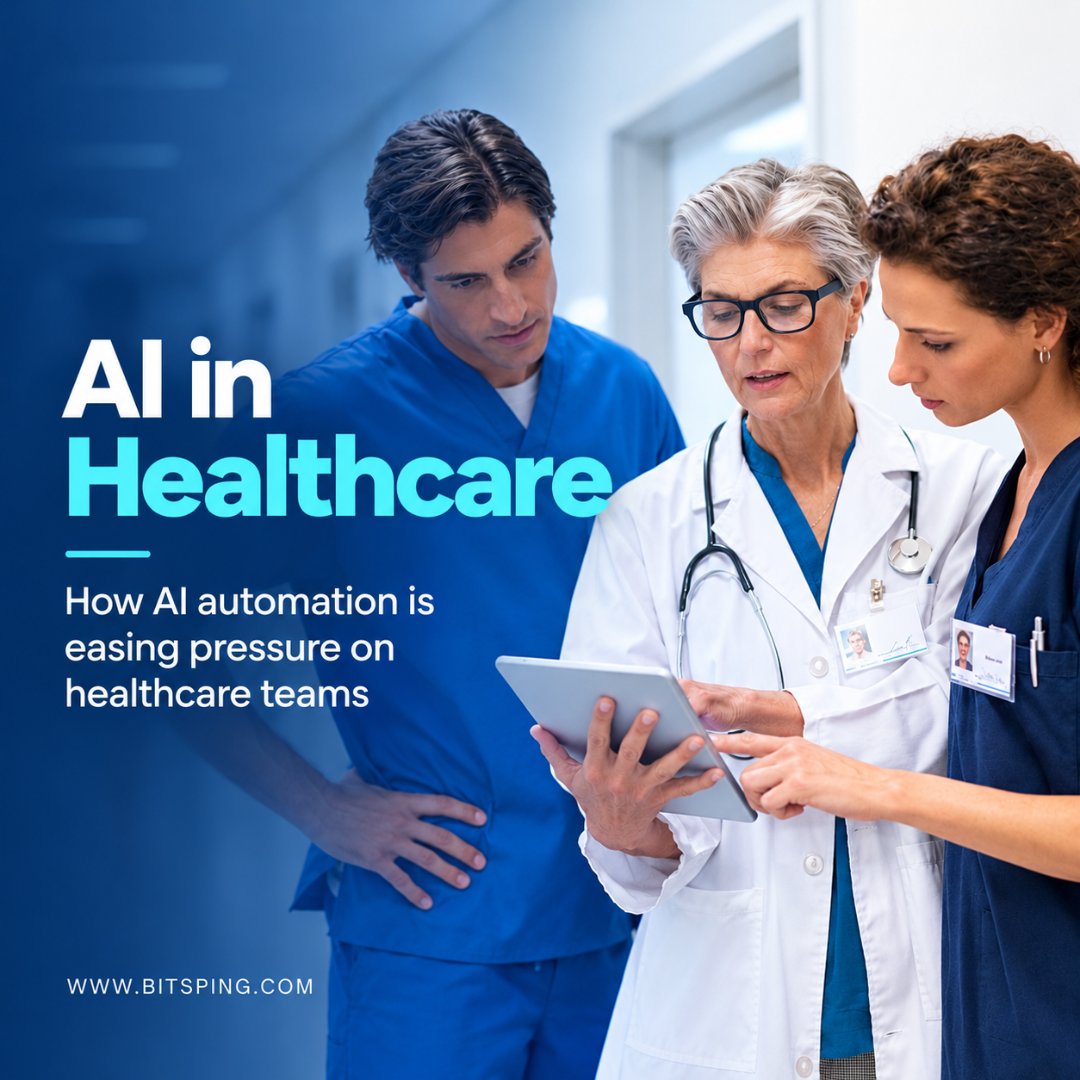

AI automation in healthcare means using smart software to handle repeat patient communication, like appointment booking, reminders and follow-ups, so staff can focus on patients who need personal care.
How most clinics and hospitals work today
Walk into almost any clinic or hospital and the front desk looks the same. The phone keeps ringing. Patients call to book, change or cancel appointments. Others ask about timings, fees or reports. Staff members note down every request, confirm slots, and call patients back one by one.
After the visit, the work continues. Someone has to remind patients about medicines, test dates and review visits. For people with long-term conditions like diabetes, blood pressure or thyroid problems, this follow-up has to happen again and again.
The records are digital. The communication is still manual.
This means:
- A few staff members handle hundreds of calls and messages every week.
- Calls go unanswered during busy hours, lunch breaks and after closing time.
- Patients forget appointments, and the doctor’s time slot goes empty.
- Follow-ups depend on someone remembering to make the call.
- When patient numbers grow, the only fix is hiring more people.
The problem is not only local. A WHO estimate, quoted in a Future Healthcare Journal paper, says the world may have 18 million fewer health workers than it needs by 2030. Healthcare cannot simply hire its way out of this gap.
Where AI automation fits in
This is where AI helps. The research paper’s authors say AI should “amplify and augment” human skill, not replace it. In practice, that means AI takes over the repeat communication work, while your team handles the cases that need a human touch.
1. Automated appointment booking. Patients book, reschedule or cancel through WhatsApp, your website or a phone assistant, at any hour. Slots update automatically, with no one needing to pick up the phone.
2. Smart reminders. The system sends reminders before each visit and offers a quick option to reschedule. This helps reduce no-shows and empty slots.
3. Regular patient follow-ups. After a visit, patients automatically get reminders for medicines, tests and review dates. A patient with a long-term condition can receive regular check-ins without a staff member making each call.
4. 24/7 patient assistant. An AI chatbot answers common questions about timings, doctors, fees, test preparation and directions. It never gets tired, and it works at night. Anything urgent or complex is passed to a person right away.
5. Reports and updates. When a test report is ready, the patient is notified automatically, with the right information at the right time.
6. Feedback and recall. The system can collect patient feedback after visits and bring back patients who are overdue for a check-up.
What changes for the team
Automation does not remove your staff. It changes what they spend time on.
| Before AI | With AI automation |
|---|---|
| Staff answer repeat calls all day | AI handles routine questions instantly |
| Missed calls mean lost patients | Every message gets a reply, any time |
| Follow-ups depend on memory | Follow-ups run on schedule |
| More patients means more hiring | The same team can serve more patients |
| Front desk is always under pressure | Staff focus on patients in front of them |
It’s not only for big hospitals
You don’t need a huge system to start. The research paper warns against forcing AI onto problems it doesn’t suit. It recommends starting with one real problem, testing small, and learning from your staff.
For most clinics, diagnostic centres and hospitals, a good first step is one of these:
- Automated appointment booking
- A WhatsApp assistant for common questions
- Automatic reminders and follow-up messages
Once that works, you can add more.
Keeping patient data safe
Patient information is highly sensitive, so any AI system should have:
- Clear rules on who can access data
- Secure, encrypted storage
- Compliance with local laws, such as India’s DPDP Act, or HIPAA where it applies
- A simple way to pass the patient to a human at any time
AI should handle communication and routine tasks. Medical decisions always stay with doctors.
What comes next
The same research paper expects AI to move toward more preventive, personalised care over the next decade. But the practical value in 2026 is simpler: healthcare teams that use AI for everyday communication can serve more patients, with less strain on staff. McKinsey reports that about 75% of hospitals are already adopting some form of administrative or clinical AI.